Bringing a furry friend into your home fills it with joy, but often, it also introduces an unwelcome guest: compromised air quality. Pet dander, persistent odors, and stray hairs can quickly turn your sanctuary into an allergy trigger or a less-than-fresh environment. If you’ve ever walked into your home and immediately noticed a “pet smell,” or found yourself sneezing uncontrollably, you understand the silent battle against airborne pollutants. This comprehensive guide will illuminate the challenges pet owners face and, more importantly, equip you with the knowledge to choose the ideal air purifier for pets, transforming your home into a haven of fresh, clean air for everyone, two-legged and four-legged alike.
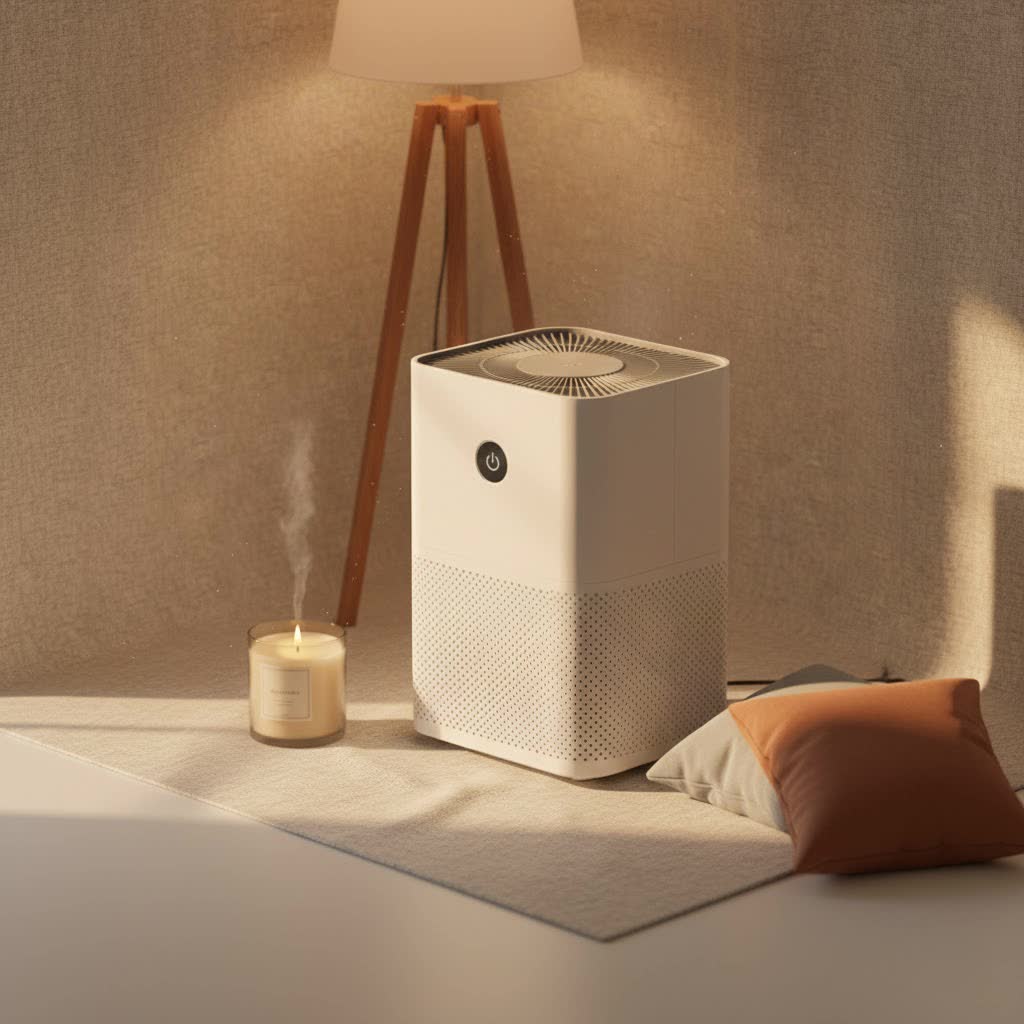
Why You Need an Air Purifier for Pets
Pets are wonderful companions, but they are also significant contributors to indoor air pollution. Understanding these airborne contaminants and their impact on health highlights why an air purifier is an essential investment for any pet-loving household.
Indoor air pollution from pets primarily stems from three sources: dander, hair, and odors. Pet dander consists of microscopic flakes of skin shed by animals, which are potent allergens. These tiny particles can remain suspended in the air for extended periods, triggering sneezing, itchy eyes, and respiratory issues for sensitive individuals. Pet hair, while larger, can also carry dander and accumulate dust, contributing to general household allergens. Finally, pet odors, caused by oils, waste, and bacteria, can permeate fabrics and surfaces, creating an unpleasant living environment.
An air purifier actively works to remove these irritants, offering significant health benefits. For allergy sufferers, consistent use can drastically reduce symptoms, leading to clearer breathing and fewer allergic reactions. Beyond allergies, purifiers improve overall indoor air quality, which benefits everyone by reducing exposure to common airborne pollutants, including dust, pollen, and even some viruses and bacteria. A cleaner home environment means better health and greater comfort for you and your beloved pets.
How Air Purifiers for Pets Work: Understanding the Types
Air purifiers employ various technologies to clean the air, each targeting different types of pollutants. For pet owners, a multi-layered approach is often the most effective to combat dander, hair, and odors.
HEPA Air Purifiers: The Gold Standard for Allergens
|
Our Picks for the Best Air Purifier in 2026
As an Amazon Associate I earn from qualifying purchases.
|
||
| Num | Product | Action |
|---|---|---|
| 1 | KNKA Air Purifier for Home Bedroom Large Room Up to 3,500 Ft², HEPA Air Cleaner with Washable Pre-Filter, AHAM VERIFIDE, AQI Display, ECO Mode, Pet Mode for Pets, Allergies, Dust, Pollen, APH4000 |

|
| 2 | LEVOIT Air Purifier for Home Allergies Pet Hair in Bedroom, Covers Up to 1073 ft² by 56W High Torque Motor, AHAM VERIFIDE, 3-in-1 Filter with HEPA Sleep Mode, Remove Dust Smoke Odor, Core300-P, White |
|
| 3 | Air Purifiers for Bedroom, FULMINARE H13 True HEPA Air Filter, Quiet Air Cleaner With Night Light,Portable Small Air Purifier for Home, Office, Living Room |
|
| 4 | LEVOIT Air Purifier for Home Bedroom Dorm Room, Smart WiFi Alexa Control, AHAM VERIFIDE, 3-in-1 Filter with HEPA Sleep Mode for Allergens, Pollutants, Smoke, Dust, Core 200S-P, White |
|
| 5 | Air Purifiers for Home Pets Covers Up to 1500 Sq Ft,H13 Hepa Filter with Washable Pre-Filter,Pet Hair Dander Smoke Air Cleaner,22 dB Quiet Sleep for Living Room Bedroom Kitchen,P280 (Black) |
|
| 6 | Air Purifiers for Home Large Room, Cover Up to 2400 Ft² with True HEPA Filter, Smart Mode, PM2.5 Air Quality Display, 22dB Sleep Mode, Aromatherapy with 2X-Purification & 360°Air Outlet, HAP603, White |
|
| 7 | LEVOIT Air Purifiers for Bedroom Home Dorm, AHAM VERIFIED, 3-in-1 Filter Claener with Fragrance Sponge, Portable Filters Smoke, Allergens, Pet Dander, Odor, Dust, Office, Desktop, Core Mini-P, White |
|
| 8 | Air Purifiers for Home with H13 Quiet HEPA Filter, Up to 1076 Ft² for Pet Hair, Odors, Pollen, Smoke, Compact Air Cleaner with 3 Speeds, Timer, Aroma Quiet 360°Intake Filter, White |
|
| 9 | LEVOIT Air Purifiers for Home Large Room Up to 1875 Ft² with Washable Pre-Filter, AHAM VERIFIDE, Air Quality Monitor, HEPA Sleep Mode for Allergies, Pet Hair in Bedroom, Vital 200S-P, White |
|
| 10 | Afloia Air Purifiers for Home Bedroom Large Room Up to 1076 Ft², 3-Stage Filter Cleaner Odor Eliminator, Remove Pets Dust Dander Hair Allergy Mold Pollen Smoke Smell, Quiet 22 dB, 7 Colors Night Light |
|
High-Efficiency Particulate Air (HEPA) filters are widely recognized as the most effective for capturing microscopic particles. A true HEPA filter is designed to trap 99.97% of airborne particles as small as 0.3 microns, which includes virtually all pet dander, pollen, dust mites, and mold spores. These mechanical filters force air through a fine mesh, physically trapping these irritants. They are essential for anyone suffering from pet allergies or asthma, providing reliable removal of the particles that trigger respiratory symptoms. While highly effective for particulate matter, HEPA filters do not address odors or chemical gases directly.
Activated Carbon Air Purifiers: Eliminating Odors and VOCs
Pet odors can be one of the most challenging aspects of living with animals. This is where activated carbon filters become indispensable. These filters contain highly porous carbon material that adsorbs odor molecules and volatile organic compounds (VOCs) through a process called adsorption. Unlike HEPA filters that trap particles, activated carbon chemically binds with gas molecules, effectively neutralizing unpleasant smells from litter boxes, wet fur, and even household chemicals. For optimal odor elimination, look for purifiers with substantial, densely packed activated carbon rather than thin mesh layers.
Washable Pre-filters: Your First Line of Defense Against Pet Hair
A pre-filter is often the first stage in a multi-stage filtration system, and its importance cannot be overstated for pet owners. These coarse filters capture larger particles like pet hair, lint, and large dust bunnies before they reach the more delicate HEPA and carbon filters. Many modern pet air purifiers feature washable or easily cleanable pre-filters, which is a huge advantage. Regularly cleaning the pre-filter extends the lifespan of the more expensive HEPA and carbon filters, reduces maintenance costs, and ensures the purifier maintains optimal airflow and efficiency.
UV-C and Ionizers: Additional Purification Layers
Some air purifiers incorporate additional technologies like UV-C light or ionizers. UV-C light is used to destroy microorganisms such as bacteria, viruses, and mold spores, adding another layer of purification. Ionizers (sometimes marketed as PlasmaWave or similar technologies) release negatively charged ions into the air, which attach to airborne particles, making them heavier so they fall out of the air. While these can enhance air cleaning, it’s important to choose ionizers that are “ozone-free,” as some older models can produce ozone, a lung irritant. Many modern purifiers with ionizers allow you to turn this feature off.
Comparison Table of Air Purifier Types (Pet Focus)
Understanding the strengths and weaknesses of each filter type can help you decide which combination is best suited for your specific pet-related concerns.
| Filter Type | Primary Target (Pet Issue) | Effectiveness Rating | Maintenance | Cost Implications (Filters) |
|---|---|---|---|---|
| True HEPA | Pet Dander, Allergens, Dust | Excellent | Replace every 6-12 months | Moderate to High |
| Activated Carbon | Pet Odors, VOCs, Chemical Smells | Excellent | Replace every 3-6 months (depending on usage) | Moderate to High |
| Washable Pre-filter | Pet Hair, Large Dust | High | Clean every 2-4 weeks (wash or vacuum) | Low (reusable) |
| UV-C Light | Bacteria, Viruses, Mold Spores | Good | Replace bulb every 1-2 years | Low to Moderate (bulb) |
| Ionizer (Ozone-free) | Enhance particle removal (dander) | Moderate | No replacement needed | None (integrated technology) |
Top Air Purifiers for Pets in 2024
Selecting the right air purifier can feel overwhelming with the myriad of options available. Based on extensive testing and user feedback in 2024, here are some top recommendations across different price segments, designed to tackle the unique challenges posed by our beloved pets.
Budget-Friendly (Under $150)
For those seeking effective air purification without a hefty investment, several models offer excellent value, particularly for smaller spaces or specific pet issues. These purifiers often focus on core filtration technologies to keep costs down.
- Levoit Core Mini Air Purifier: An excellent compact choice for small rooms like bedrooms or offices, offering impressive particle removal for its size. It quietly filters air and is ideal for targeting localized pet dander and dust.
- Kenmore 850e Air Purifier: This model stands out for its three levels of filtration and portability at an accessible price point, making it a solid option for individuals seeking basic yet effective air cleaning.
Mid-Range ($150-$400)
This segment offers a sweet spot, balancing advanced features, larger coverage areas, and robust multi-stage filtration systems perfect for most households with pets. These are often the most recommended for overall performance.
- Winix 5500-2 4-Stage True HEPA Air Purifier: Consistently rated as a top performer, the Winix 5500-2 is a powerhouse against pet dander, odors, and hair. It features a washable pre-filter, activated carbon, True HEPA, and PlasmaWave technology, effectively covering large spaces. Its multi-stage system ensures thorough air cleaning.
- Levoit Vital 200S Smart True HEPA Air Purifier: An outstanding value pick, especially for homes with multiple pets. It boasts a unique U-shaped air inlet to prevent clogging from pet hair and a highly efficient washable pre-filter. The Vital 200S excels in particle removal, cleaning the air by up to 96% in tested environments.
- Coway Airmega AP-1512HH Mighty: This compact yet powerful purifier includes a True HEPA filter and activated carbon. It features an eco-mode and an air quality sensor, making it energy-efficient and capable of automatically adjusting to your home’s needs. Its performance against dander and odors is highly praised.
Premium (Over $400)
For large homes, specific aesthetic preferences, or those demanding the absolute best in quiet operation and smart features, premium air purifiers deliver exceptional performance and advanced capabilities.
- Levoit Core 600S Smart True HEPA Air Purifier: The ideal choice for very large rooms (up to 635 sq. ft. coverage), providing powerful, ozone-free three-stage filtration. It’s noted for its quiet operation even at higher speeds and smart features for convenient control.
- Rabbit Air MinusA2 / A3 Ultra Quiet HEPA Air Purifier: Known for its extremely quiet operation and sleek design (can be wall-mounted). The Rabbit Air models feature multi-stage filtration, including customized pet allergy filters and activated carbon, making them excellent for noise-sensitive environments and comprehensive allergen/odor removal. The A3 model is particularly effective at eliminating odors with its five-stage system.
- Blueair DustMagnet 5410i / Blue Pure 311i Max: Blueair purifiers are celebrated for their stealthy, quiet operation, making them perfect for bedrooms. While focusing primarily on HEPA particle filtration, the DustMagnet is effective at capturing dander, and the Blue Pure 311i Max offers an easy-to-clean wraparound pre-filter.
How to Choose the Right Air Purifier for Your Pets
Selecting the best air purifier involves considering several factors specific to your home, your pets, and your personal needs. Making an informed decision ensures you invest in a device that genuinely improves your indoor air quality.
Room Size and CADR
The effectiveness of an air purifier heavily depends on its ability to clean the air in a given space. Always match the purifier’s stated coverage area to the square footage of the room where it will be used most. Beyond square footage, look for the Clean Air Delivery Rate (CADR). CADR indicates how quickly the purifier can remove specific pollutants (dust, pollen, smoke). A good rule of thumb is that the CADR rating should be at least two-thirds of the room’s square footage. For example, a 150 sq. ft. room would need a CADR of at least 100. This ensures the air is filtered efficiently multiple times per hour.
Your Specific Needs
- Allergies: If pet allergies are your primary concern, prioritize a purifier with a True HEPA filter. These are essential for capturing microscopic dander and other allergens.
- Odors: For persistent pet odors, an air purifier with a robust activated carbon filter is non-negotiable. The more carbon, and the denser it is, the better it will be at adsorbing smells.
- Pet Hair: Homes with shedding pets will greatly benefit from a model featuring a durable, easily washable pre-filter to capture larger strands of hair and prevent clogging of the finer filters.
Budget
Air purifiers range widely in price, from under $100 to over $1,000. Consider not only the initial purchase price but also the recurring cost of replacement filters. While budget-friendly models offer basic filtration, mid-range and premium options often provide better coverage, more advanced features, and sometimes longer-lasting or more efficient filters. Balance your budget with the long-term benefits and operational costs.
Noise Level
Pets, like humans, can be sensitive to noise. A loud air purifier, especially one running continuously, can be disruptive. Look for models with low decibel (dB) ratings, particularly for use in bedrooms or living areas where you and your pets spend a lot of time. Many high-quality purifiers now offer “sleep modes” or quiet settings that operate almost silently.
Additional Features
Modern air purifiers come with a host of convenient features:
- Smart Sensors: Automatically detect air quality and adjust fan speed accordingly.
- Auto Mode: Simplifies operation by letting the purifier manage its settings.
- Timers: Allows you to schedule operation, saving energy.
- Filter Indicators: Alerts you when filters need cleaning or replacement.
- Smart Connectivity: Enables control via a smartphone app, even when you’re away from home.
> “Choosing an air purifier is a holistic decision. You need to consider the size of your space, the type and number of pets, and the specific pollutants you’re fighting. A good purifier isn’t just about the filters; it’s about how it integrates into your daily life to provide continuous clean air.” – Dr. Sarah Miller, Veterinary Environmental Health Specialist.
Tips for Using and Maintaining Your Pet Air Purifier
To ensure your air purifier performs optimally and prolongs its lifespan, proper usage and maintenance are crucial. These simple tips will help you maximize its effectiveness in tackling pet-related air issues.
Optimal Placement
The location of your air purifier significantly impacts its efficiency. Place the unit in the room where your pets spend the most time, preferably in a central location or a high-traffic area. Ensure it’s not obstructed by furniture, walls, or curtains, which can block airflow. Leave a few feet of clear space around the intake and output vents for optimal circulation. If you have multiple pets or a large home, consider placing smaller units in several key areas or a larger, high-CADR unit in an open-concept living space.
Regular Cleaning and Filter Replacement
This is perhaps the most critical aspect of air purifier maintenance for pet owners.
- Pre-filter: As pet hair and lint accumulate rapidly, regularly clean the pre-filter, ideally every 2-4 weeks. If it’s washable, rinse it thoroughly and allow it to dry completely before reinserting. If it’s a vacuumable type, gently clean it with a brush attachment.
- HEPA and Activated Carbon Filters: These filters have a finite lifespan. HEPA filters typically need replacement every 6-12 months, while activated carbon filters, especially with strong pet odors, might need changing every 3-6 months. Follow the manufacturer’s recommendations and pay attention to filter replacement indicators. Ignoring these can lead to reduced efficiency and a return of air quality issues.
Other Important Considerations
- Complementary Cleaning: An air purifier is a powerful tool, but it’s not a substitute for regular household cleaning. Vacuuming carpets and furniture (especially where pets rest), washing pet bedding weekly, and regular dusting will significantly reduce the load on your air purifier.
- Ventilation: While an air purifier works to clean recirculated indoor air, occasional natural ventilation (opening windows for a short period) can help exchange stagnant air, especially in conjunction with your purifier.
- Pet Grooming: Regular grooming of your pets can also help reduce shedding and dander, further contributing to better indoor air quality.
- Avoid Harsh Chemicals: When cleaning your air purifier’s exterior, use mild, non-toxic cleaners. Avoid harsh chemicals that could damage the unit or release VOCs into the air it’s trying to clean.
Conclusion
Living with pets enriches our lives immensely, and with the right air purification strategy, you can enjoy their companionship without compromising your home’s air quality. By understanding the common pet-related pollutants—dander, hair, and odors—and investing in a multi-stage air purifier featuring True HEPA and activated carbon filters, you can create a healthier, fresher indoor environment. Consider factors like room size, CADR, noise level, and maintenance requirements to find a model that perfectly suits your needs, whether it’s a top-rated Winix 5500-2 for comprehensive coverage or a quiet Levoit Vital 200S for targeted relief. Regular cleaning and filter replacement, alongside good household hygiene, will ensure your chosen air purifier continues to deliver peak performance.
Are you ready to transform your home into an allergy-free, odor-neutral haven for you and your beloved pets?
Frequently Asked Questions
Do air purifiers help with pet hair on furniture?
While air purifiers excel at removing airborne pet hair and dander, they are not designed to remove hair that has already settled or embedded itself into furniture, carpets, or clothing. For that, regular vacuuming and cleaning remain essential.
How often should I run my air purifier if I have pets?
For optimal air quality in a pet-owning household, it’s recommended to run your air purifier continuously, especially in the room where your pets spend the most time. Many models have auto modes that adjust fan speed based on detected air quality, saving energy.
Can an air purifier completely eliminate pet odors?
An air purifier with a high-quality activated carbon filter can significantly reduce and neutralize most pet odors by adsorbing odor molecules. However, complete elimination might require a combination of air purification, regular cleaning of pet areas, and proper ventilation, as odors can also embed in surfaces.
Are ionizers safe to use around pets?
Ozone-free ionizers are generally considered safe. Some older or lower-quality ionizers can produce ozone, which is a lung irritant for both humans and pets. Always check if a model specifies “ozone-free” or allows the ionization feature to be turned off if you have concerns.
What CADR rating do I need for a room with pets?
For a room with pets, you typically want a CADR rating that is at least two-thirds of the room’s square footage. For example, a 300 sq. ft. room would need a CADR of at least 200 to effectively filter pet dander, dust, and pollen. Higher CADR is always better, especially for multiple pets.
